
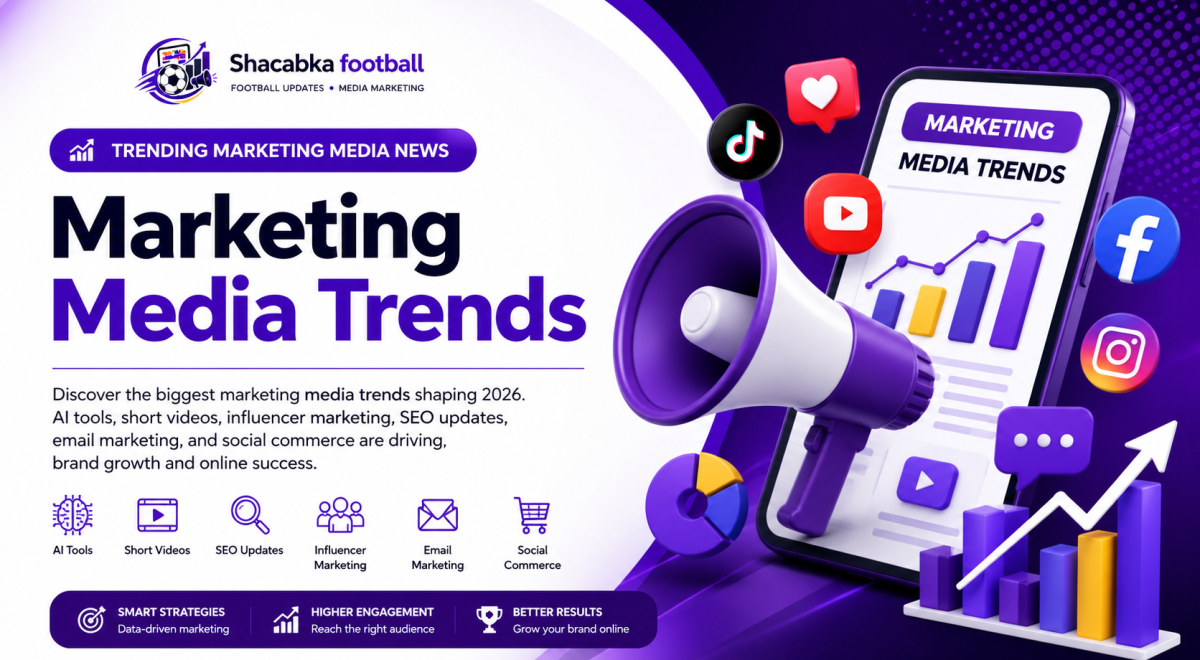
Marketing Media Trends
What’s Trending: Marketing Media News Marketing media is evolving faster than ever with new technology changing how brands communicate with their customers. This rapidly changing digital marketing space is the product of forces:
- like AI,
- Short-form video,
- Social media platform advancements, and
- Search engine updates.
- Businesses small and large are increasing online advertising spend, embracing partnerships with creators, and utilizing data in their digital marketing.
Consumers are looking for content that is valuable, entertaining, and reliable-pushing organizations and agencies to put a greater emphasis on quality over volume.
Search giants such as Google continue to reward relevant, authoritative original content addressing your audience’s queries and social channels like :
- Facebook,
- Instagram,
- TikTok,
- LinkedIn, and
- YouTube
continue to integrate more powerful AI for creators and advertisers alike. Video content is growing, with short-form videos reaching impressive engagement numbers across most key platforms. Other methods like influencer marketing, email marketing, and social commerce continue helping marketers forge relationships and drive sales. It’s clear that changes are happening to marketing privacy features and the emphasis on first-party data; marketing organizations are in need of new metrics.
We summarize the biggest marketing media trends, AI news, and social media developments of the 2026 digital advertising and SEO industry below.
These insights for business owners, content creators, blog writers and any digital marketer seeking to win against competitors in the digital space.

AI Content Tools Continue to Expand
Today, artificial intelligence is one of the most important tools of digital marketing. Now the companies, bloggers and content creators utilize AI to handle daily routine tasks and increase their productivity. Today’s AI platforms have the ability to generate ideas to write blogs, draft articles, compose social posts, create images and videos, and even create clickworthy titles. Tools like these enhance their productivity by helping marketing teams saves their time, while at the same time they continue meeting their client’s ever increasing demand for fresh content online.
However, AI has a good effect, but can it ever totally substitute human skills. It is likely that purely AI-written content will include inaccuracies, redundant topics, or will not fit the brand voice. Human editors are still required to verify the facts, enhance readability, add personal perspective and produce original, relevant information that is of value to the reader. This will also assist to fulfill Google’s request for unique, helpful and valuable content.
Most businesses adopt a mixed method approach by combining AI and human assistance. They produce quality articles, videos and marketing campaigns by integrating AI into their workflow. They use AI to perform repetitive tasks, research, create outlines, etc., while human beings are able to work on the storytelling, strategy, and precision of the content. This way they are able to save their time while maintaining their standards and trust.
Due to advancement, it will continue to hold an increasingly larger position within content marketing. Organizations that leverage AI effectively while continuing to uphold stringent editorial practices are in a strong position to increase their rankings in search results, enhance reader engagement, and ultimately build a lasting customer relationship.

Short Videos Rule Social Media
In 2026, short-form video still tops the social media marketing space. Whether through Instagram Reels, TikTok, YouTube Shorts, or Facebook Reels, brands can connect with new audiences and boost engagement most effectively through this format. Thousands and thousands of users are watching short videos daily, and it’s one of the fastest ways to bring brand awareness to the forefront.
Thanks to impressive results, brands across various industries have been investing in video marketing because it has so many benefits. Product demos, behind-the-scenes clips, customer testimonials, brief tutorials, and current viral challenges are often much more engaging than texts or images. Short videos are convenient, consume-able, work on mobile devices, and are more likely to appear on a user’s personalized recommendations feed.
Brands and creators thrive on this format by offering valuable, useful, or entertaining content for the viewers. High engagement rates often stem from enticing video openers, clearly visible subtitles, and a consistent posting cadence. Many are even utilizing AI software for video editing, captions and trending ideas, allowing for quick turnarounds.
As the competition grows, be sure that quality, along with authentic, value-driven messaging outrank clickbaity, promotional content.
The combination will help boost conversions, encourage site visits, and cultivate stronger customer relationships for any organization in the space. For the remainder of 2026 and beyond, short videos are expected to be among the most dynamic digital marketing tools available.

Google Priorities Original Content
A website’s success with search engines today depends on its commitment to original and high-quality content. Google continues to refine its algorithms to favor websites that answer users’ questions with helpful and authentic information. Ultimately, websites and individuals should strive to create content that satisfies human curiosity over simply appeasing algorithms and machines.
Despite how efficiently AI-generated content can simplify the writing process for individuals who might lack the writing skills or time to generate a vast number of content pieces; the reality is, AI cannot replicate high-level expertise. For starters, content generated by AI can be unreliable and prone to plagiarism issues. Secondly, these texts seldom match the human touch in explaining nuance and intricacies within a given topic, contributing little value overall to human readers.
Such content is unlikely to do well on Google searches because Google rewards high-quality content and originality while devaluing those content pieces where this is not evident.
Human involvement is often needed in order to vet claims and to translate into clearer prose information compiled from myriad AI outputs, especially as it has come up again and again that much A.I. Content is redundant, lacking original ideas, and ultimately less helpful.
This approach forces bloggers and publishers to concentrate on solving real-life problems for their target audience. The SEO strategy that comes closest to achieving this goal involve those websites that present a smooth user experience to their website visitors with clean URLs, appropriate navigation and internal linking. In addition to providing clearly labeled and organized headings for their contents and efficiently optimize web pages andImages on their websites, such websites frequently keep content fresh and up to date.
When writing and publishing articles, always aim for quality over quantity. If your blog, Business, or website doesn’t update with quality content periodically, its search Engine Performance Will Degrade Due to Search Algorithm. The number of keywords and the relevancy and quality of your content are just two of many important rankings Google will consider when determining the prominence of your article; for example Google places the importance on content’s readability. With a little extra effort, your content should naturally gain quality backlinks and increased traffic.

Meta Expands AI for Advertising
Meta is improving its array of AI-driven features for businesses utilizing its advertising tools across Facebook and Instagram. Companies are being given smarter tools which streamline campaign creation, enhance audience targeting, and improve advertising performance. AI can assist with writing ad copy and ad headlines, developing image variations, and recommend optimum creative formats to target a brand’s goal. This enables businesses to launch campaigns quicker, freeing them of manual tasks.
A key feature of Meta’s AI is its ability to examine large volumes of user data and determine the precise audiences which would respond best to an ad. The platform is also capable of testing different versions of an ad and automatically tracking performance to direct more capital toward the creatives which perform the best. This enables businesses to maximize their ROI and minimize wasted ad spend.
Small businesses stand to benefit equally from these improvements as large enterprises as these AI tools take away the need for large marketing teams or extensive technical knowledge. Campaigns could then continually adapt in real-time based on user interactions and Meta’s learning to achieve greater results. As digital advertising becomes increasingly competitive, brands that adopt these automated, AI-driven tools while supplementing them with creative, high-quality content are sure to increase conversions and expand their customer base in the long run throughout Meta’s platforms.
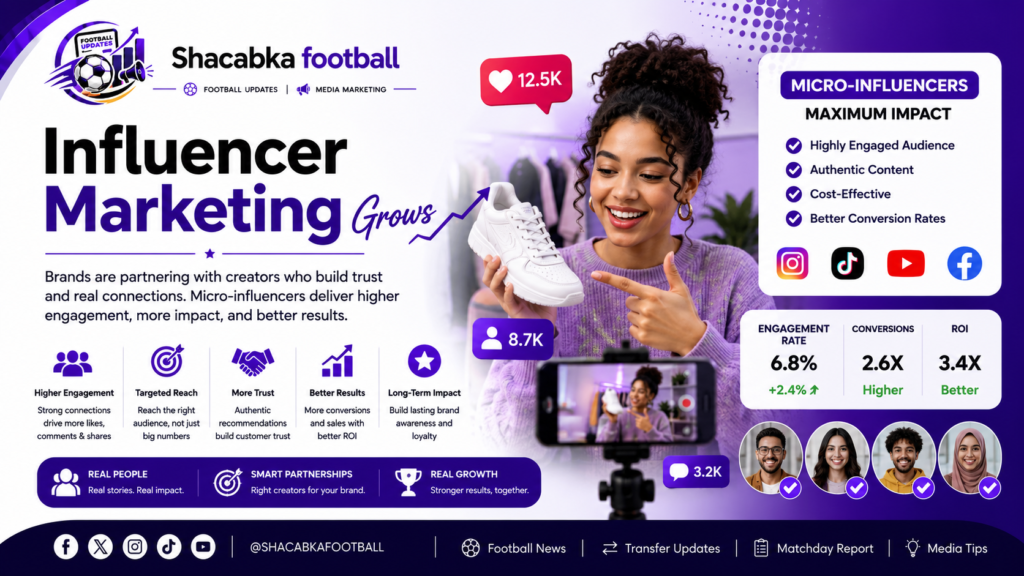
Influencer Marketing Grows
Influencer marketing will remain at the forefront of the fastest growing digital marketing fields in 2026. While some brands still work with large, well-known celebrities; many have begun to shift toward micro-influencers who possess a smaller, albeit highly loyal following. These creators tend to have close relationships with their followers, thus making their recommendations feel much more genuine. This leads to higher engagement, more click-throughs, and increased customer loyalty.
Micro-influencers develop creative and engaging content that easily integrates into the native styles of platforms such as Instagram, TikTok, YouTube, and Facebook. Their sponsored content is typically delivered through product reviews, tutorials, behind-the-scenes videos, or personal experience to demonstrate the value of a product or service. Because their followers trust their opinions, their sponsored content is more effective than banner advertisements.
Businesses have also began partnering with creators on a long-term basis as opposed to a single one-time promotion. This style of marketing allows for constant brand visibility and establishes the influencer as a more trusted voice for a company’s products. Marketers are now looking at the engagement metrics, website traffic, conversion rate, and sale data of a campaign rather than solely evaluating it based on the creator’s follower count.
As social media continues to evolve, influencer marketing will remain an integral marketing strategy for companies trying to reach specific niche audiences. Brands that select creators who resonate with their own beliefs and values, coupled with a commitment to authentic storytelling, are highly likely to build brand awareness and create meaningful long-term brand awareness.
First-Party Data Becomes More Important
First-Party Data Surges in Importance First-party data is one of the most powerful assets for brands to possess by 2026. Given the evolving privacy landscape and the phased out presence of third-party cookies, businesses are leaning on data generated directly from their customers through email subscriptions, website sign-ups, memberships, loyalty programs, and customer feedback and purchase data. Since these data sets are provided directly by consented users, they’re typically more precise and trustworthy than data that comes from an external source.
Brands leverage the customer data of first-party audiences to better anticipate what they want, tailor marketing messages for a higher success rate, and deliver an appropriate user experience, such as personal product recommendations or localized landing pages.
The companies are ensuring they are transparent with data practices, thereby protecting trust with customers while collecting their contact information or purchasing behavior information. Having a solid strategy for developing firsthand consumer information helps brands minimize their reliance on third-party systems to ensure long-term and effective long-term advertising efficacy, while maintaining sustainable, authentic relationships with consumers.

Video SEO Is Becoming Popular
Video SEO is gradually becoming indispensable in digital marketing because of people searching for information through Google and YouTube. Companies optimizing their videos will be able to get more views, more traffic to their websites, and enhance brand recognition. Modern search engines take into consideration titles, descriptions, captions, keywords, and thumbnails of video content when determining what video to show to people.
The ideal video should have a good title, use of keywords, and an informative description of the topic discussed. Captions enhance the ability to access information and allow search engines to comprehend the content. Custom thumbnails are used to attract more viewers. The inclusion of videos in blog posts is also helpful in ensuring visitors spend more time on the website.
With the rising trend of video consumption, brands using video SEO are set to benefit immensely from increased ranking and audiences reached.

The Development of Voice Search Is Continuing
More and more people rely on smart speakers, smartphones, and other devices with digital assistants in order to search for information on the web. People do not enter short keywords anymore; instead, they ask a question in natural language. It influences the way that companies develop their content and SEO strategy.
In order to achieve good results in voice search, it is necessary to give answers to frequently asked questions in your website. The use of conversational content helps to get into featured snippets and voice search. In addition to this, fast loading of a site and its mobile-friendly design are also essential.
The usage of long-tail keywords which correspond to natural speech should be prioritized. The optimization of frequently asked questions and local business is also helpful. With the further development of voice technology, the optimization for voice search will become very important.

Email Marketing Proves to Be Highly Effective
Email marketing can still be considered among the most successful forms of digital marketing due to its high ROI and help in building long-term relationships with customers. It should be noted that unlike social networks, email marketing allows communicating with people who have already expressed their interest in products and/or services of a company.
Effective email marketing involves sending useful content rather than constant promotions.
Personalized email subject lines, valuable newsletters, information about new products and special offers attract more attention from recipients. Email automation enables sending emails with greetings, reminders and abandoned shopping cart notifications automatically.
Collecting email addresses of potential clients via websites and lead magnets is much better than purchasing huge email lists. Companies that regularly share useful content earn trust and become more popular among clients.

Social Commerce Evolves to Stay Relevant
The popularity of social commerce is on the rise as more people make purchases using social media. Today, shopping has become easier and faster with Facebook, Instagram, TikTok, and YouTube having shopping options where the consumer can search for, examine, and purchase products directly on the platform.
Companies have used product tags, live shopping, short videos, and influencer collaboration to promote their products. Images have been used extensively since most people will want to see some demonstrations or reviews or unboxings before making a purchasing decision. Ease of checkout process also leads to fewer steps during the checkout process.
From the brand perspective, social commerce involves marketing and shopping combined. Companies that have been able to develop great content, answer questions instantly and provide authentic communication will be able to drive more conversions. As more shopping tools continue to emerge in social media sites, social commerce will continue to drive retail growth.
Conclusion
Marketing media is continuously changing through the emergence of new technologies, shifts in consumer behavior, and updates from search engines. Artificial intelligence will help firms produce content more quickly, while short-form videos remain the best way to attract the attention of people in social media. At the same time, Google prioritizes content that helps users and is unique to encourage publishers to produce quality content rather than large amounts of it.
Businesses also use artificial intelligence to develop ads, collaborate with influencers, collect first-party data, and send personalized emails. The use of video SEO, voice search optimization, and social commerce has become necessary for firms that want to reach modern customers and improve their online presence.
Firms that will implement these changes will be able to enhance engagement and increase the number of qualified traffic to websites. Digital marketing requires an approach that considers valuable content, SEO, data analysis, and customer engagement. Brands need to learn constantly and test new approaches in order to be competitive in the future.
As marketing media continues to change in 2026 and later years, companies that will innovate and produce trustworthy and high-quality content will be ready for success.
Shacabkafootball:- for more Updates on Media Marketing and football News.